
The decision comes before the contract
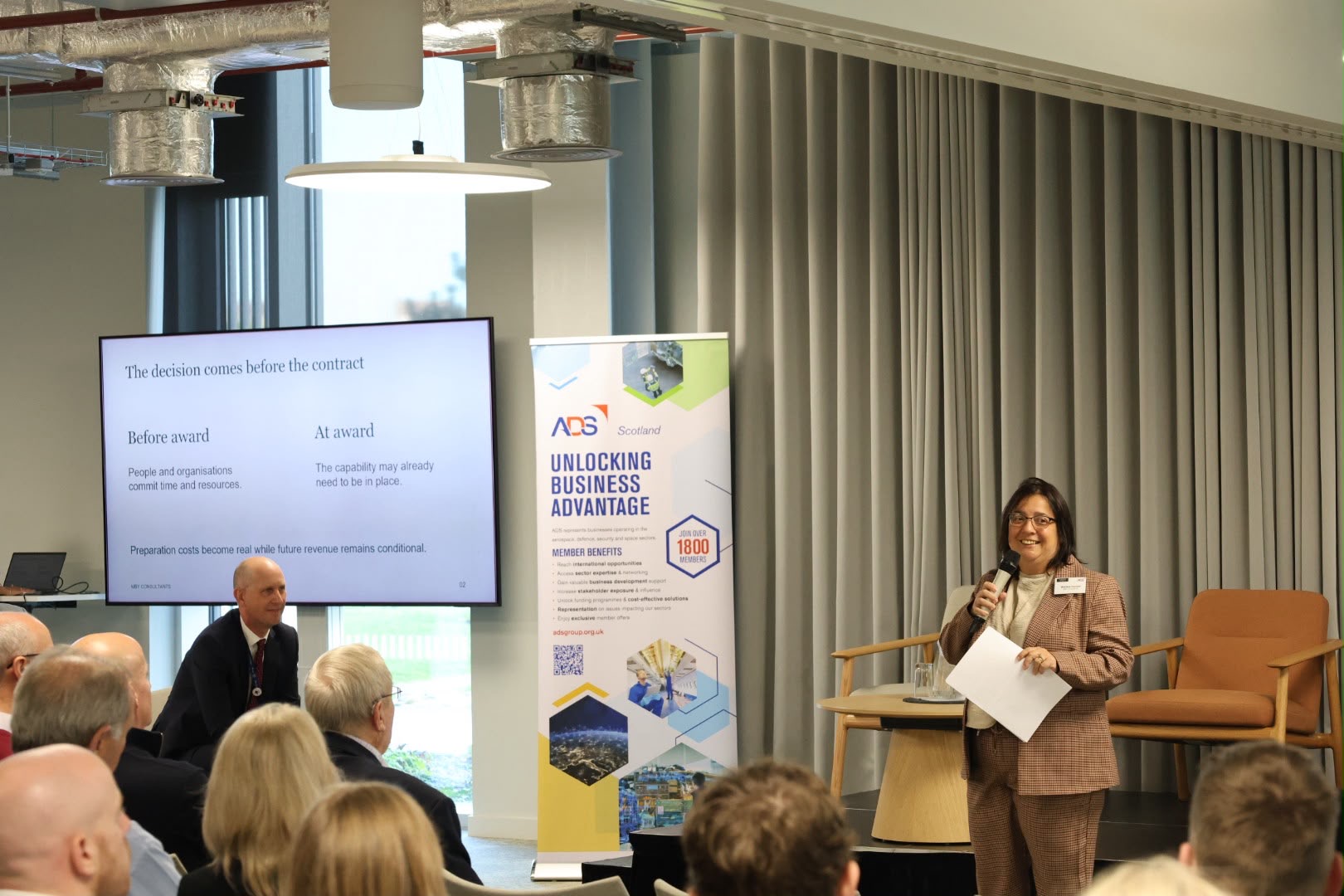
Last week, while speaking at the ADS Scotland Skills Summit at Fife College, I put one sentence on the screen:
The decision comes before the contract.
It sounds obvious. In practice, much of the way we discuss skills, supply chain capacity and industrial growth ignores it.
We often begin with the skills shortage. We ask how many engineers, technicians, project professionals or apprentices will be required. We discuss recruitment, training and retention as though the required capacity can be created once the work has been awarded. By then, it may already be too late.
Before bidding for a major contract, a business may need to recruit people, develop systems, secure accreditations, reserve production capacity and invest considerable management time. None of that expenditure is guaranteed to produce revenue.
A college deciding whether to create a course or invest in specialist facilities faces a similar question. Is the future demand sufficiently credible to justify committing resources now?
The individual faces it too. Is this qualification likely to lead to a lasting career? Is it worth retraining, relocating or leaving secure employment for an opportunity that may not materialise?
These are investment decisions that are made before the contract exists.
The sharpest exposure sits with smaller businesses
Large organisations may be able to maintain capability across several potential programmes. Most SMEs cannot.
If they wait until an award is certain, they may not have the people, systems or capacity required to compete or mobilise. If they invest too early and the procurement is delayed, reduced or cancelled, they carry the cost. The same problem arises when the opportunity is real but the contract transfers too much risk, provides insufficient volume, delays payment or offers no credible continuity beyond the initial requirement.
An opportunity is not the same as investable demand. That distinction matters because smaller businesses are frequently told that major programmes will create opportunities throughout the supply chain. But businesses cannot invest against the word “opportunity” alone. They need to understand the likely work, its timing, the standards expected, how it will be procured and whether success could support a sustainable business rather than a single short-lived order.
They do not require certainty. They require enough credible information to make a measured decision.
This is not a sector-specific problem
The Summit focused on aerospace, defence, security and space, but the underlying commercial problem is not confined to those industries.
It exists in offshore energy when suppliers are expected to retain specialist capability while investment decisions and project schedules remain uncertain. It exists in nuclear when businesses must invest in assurance, security and regulated delivery capability long before they know whether they will secure work. It exists in infrastructure, maritime, advanced manufacturing and emerging technologies whenever organisations are encouraged to prepare for future demand without a sufficiently visible route to the market.
The technical requirements differ. The decision facing the business does not:
Do we have enough confidence in the opportunity to commit our resources now?
Announcements can establish ambition. Pipelines can indicate scale. Strategies can identify the skills that may be required. None of those things, by themselves, creates capacity.
Capacity develops when ambition becomes visible demand: credible programmes, realistic procurement dates, accessible work packages, proportionate commercial terms and sufficient continuity to justify investment.
Skills policy cannot sit apart from procurement
If we want businesses to recruit and train people, procurement strategy must give them enough time and confidence to do so. If we want colleges to develop the right courses, they need credible information about the capabilities employers will require and when they will require them. If we want individuals to commit to new careers, they must be able to see more than an immediate vacancy. They need some reason to believe that the opportunity has a future.
That means skills policy cannot be treated as a separate social initiative attached to industrial strategy after the important commercial decisions have already been made. The two are inseparable.
Every promised future job depends upon a decision being made today by a business, an educator or an individual. Someone must accept the cost and risk of acting before the outcome is guaranteed.
From industrial ambition to credible commitment
This does not mean governments or major customers should guarantee work that has not been competed or approved. It means they should recognise the consequences of unclear requirements, changing dates, fragmented procurement and prolonged uncertainty.
Uncertainty can be governed. Ambiguity cannot. Clearer signals allow businesses to assess risk, choose where to invest and prepare responsibly. Poor signals either delay investment or encourage organisations to commit on assumptions that may later prove false.
Neither outcome builds a resilient industrial base.
Reindustrialisation will require skills. But skills will develop and remain where people and organisations can see a credible route from capability to work. That was the central argument I wanted to make at the Summit.
By the time a contract is awarded, the necessary capability may already need to exist. The decisions that create that capability therefore cannot wait until the award.
The decision comes before the contract.
Our industrial strategies, procurement models and commercial structures need to recognise it.